
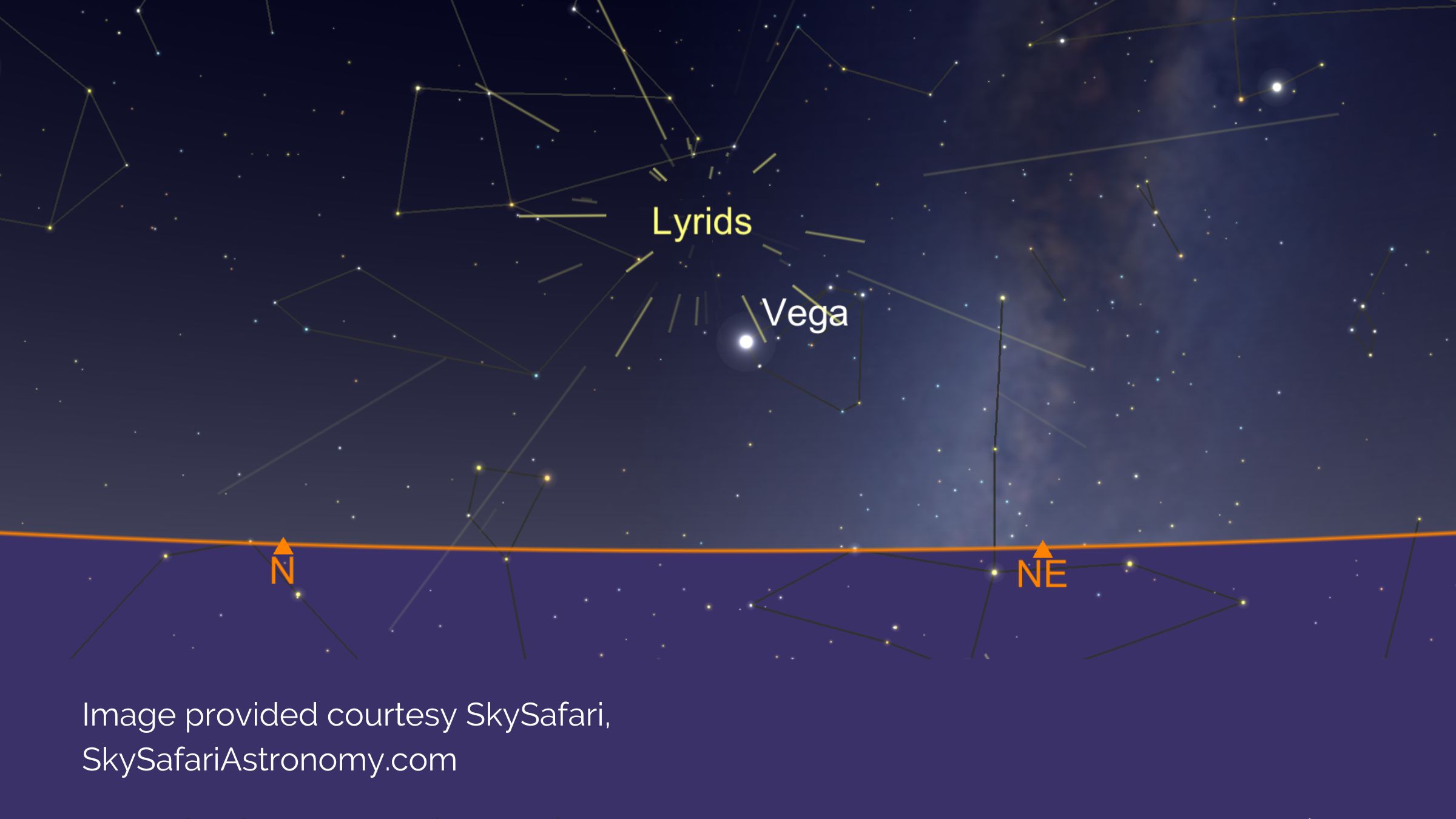
The Lyrid Meteor Shower is known for its fast and bright meteors, with occasional fireballs.
Meteor showers are named after the constellation where they appear to come from. In the case of the Lyrids, the meteors come from the direction of the Lyra constellation. If you have a handy smartphone app that helps you identify objects in the night sky, search for Lyra, and you’ll be looking in the right location.
Lyra is below the horizon for most of the night, and low on the horizon for the remainder. This means the meteors are also very low on the horizon, making them difficult to see. If you’re in the north of WA, you have a far better chance of seeing meteors from the Lyrids. The Lyrids are forecast to produce up to 18 meteors per hour with rare surges.
The Lyrids Meteor Shower is active from 16th to 25th April every year, with the peak viewing time on the night of 22nd-23rd April.
Is the Lyrids Meteor Shower worth getting out of bed for?
Not this year, unfortunately. The full Moon is a real spoiler! The sky will be very bright and it will make it difficult to see anything but very bright meteors.
When and where can I see the Lyrids Meteor Shower?
If it were ideal dark sky conditions, viewing could start from 2am on 23rd April, looking towards the low north eastern horizon. The shower’s best viewing is around 5am, when the radiant point is high in the sky above the northern horizon.
Use the above image as a guide. Astronomical images provided by SkySafari, a Simulation Curriculum Company, All rights reserved www.simulationcurriculum.com.
What is a meteor shower?
A meteor (commonly called a “shooting star”) is an unexpected, brief streak of light you might see in the night sky. The streak of light is caused by space debris, which can be as tiny as a single grain of sand and travelling at speeds of up to 75km per second when it hits our atmosphere. When this debris burns up in Earth’s atmosphere, it causes a brief, bright streak of light in the sky, and it’s usually only visible for a split second.
A meteor shower is a celestial spectacle where large numbers of meteors, or shooting stars, streak across the night sky. These dazzling events occur when Earth passes through the trail of debris left by a comet or other object that has entered our solar system, travelled around the Sun and left again.
Meteor showers are visible to the naked eye and offer you a mesmerising display of bright streaks of light. We think they add a touch of cosmic wonder to the night.
Where is the best place to watch a meteor shower?
The best place to see any meteor shower is away from bright city lights and where the night sky is dark with no moonlight. Bright moonlight and light pollution make it harder to see meteors, however you may still be able to see brighter ones.
We recommend that you travel out to a dark sky location at one of WA’s Astrotourism Towns. If you’re an astrophotographer, these give you an excellent opportunity to capture meteors over some of WA’s iconic landscapes.
Do I need a telescope or binoculars to see a meteor shower?
You don’t need either a telescope or binoculars to see a meteor shower. Meteor showers make for a great time to gather with friends under the stars. Simply roll out your favourite picnic rug, pack the drinks and snacks, and start counting how many “shooting stars” you see!
The predicted hourly rate of meteors you’ll see presumes you’re viewing them in a perfectly dark sky and that the shower is directly overhead, so your numbers might vary. But keep your fingers crossed for a spectacular show!
Something interesting
Meteor showers are named after the constellation where the “shooting stars” appear to be coming from. If you have a handy smartphone app that helps you identify objects in the night sky, search for the constellation, and you’ll be looking in the right direction.
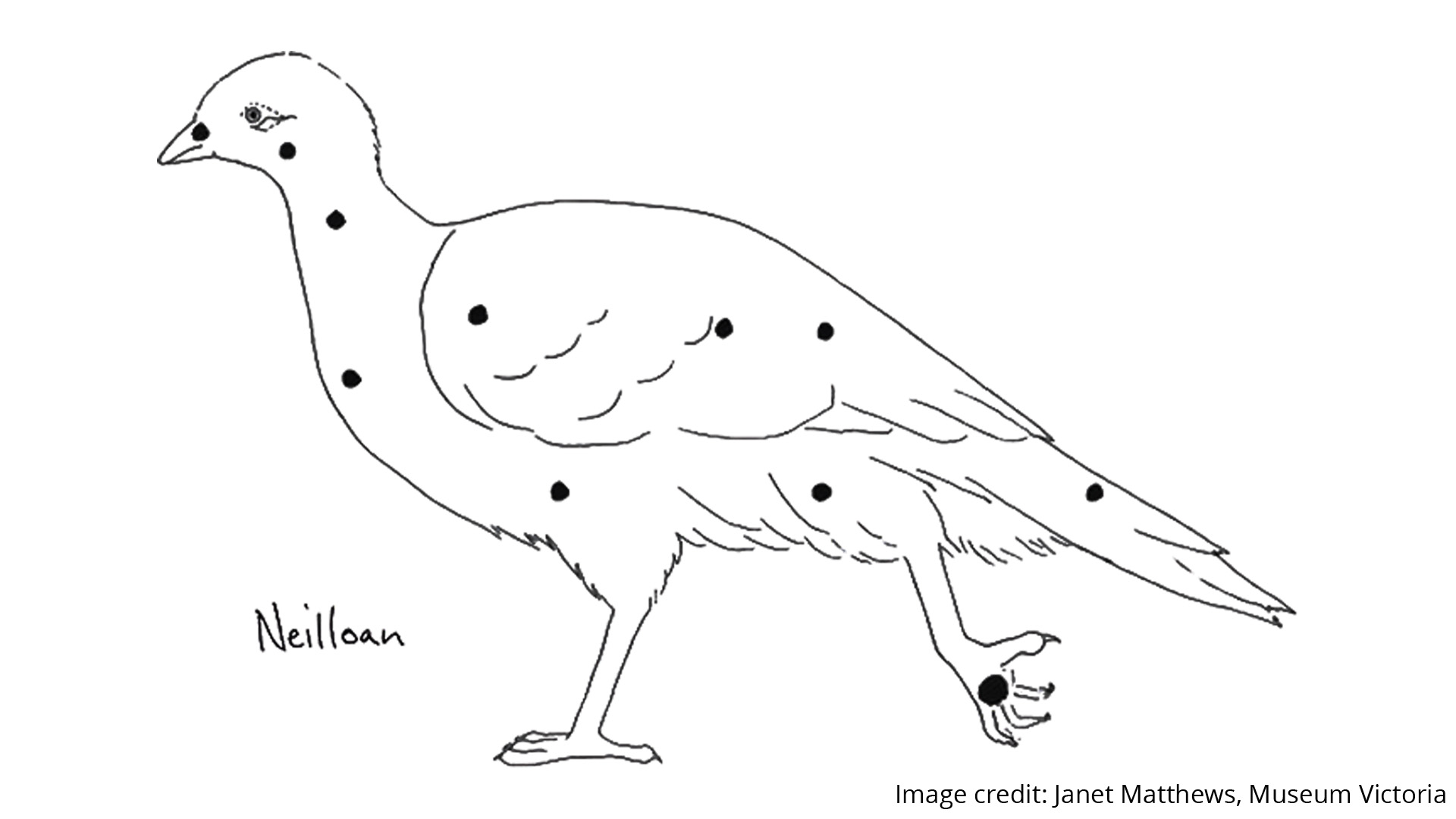
For the Boorong people, the constellation of Lyra is Neilloan is the Malleefowl. Image credit: Janet Matthews, Museum Victoria
Observed for at least 2,600 years, the Lyrids are the longest observed meteor shower. For the Boorong clan of north-western Victoria, the constellation of Lyra was the ancestral Malleefowl, Neilloan, and she taught people when to look for Malleefowl eggs.
The Lyrid meteor shower coincides with the time the Malleefowl start to build their elaborate nests, with the streaks of the meteor shower itself resembling a bird kicking up sand as she builds a nest.
You might like to report a fireball!
Become a citizen scientist and report meteor sightings. If you happen to see a very bright meteor (often referred to as a “fireball”), the fireballs team based at WA’s Curtin University would love to know. Report your fireball sighting with the International Meteor Organization.
The International Meteor Organization is a great place to discover more about all things meteors, check out their Meteor Shower Calendar, and you can even become a member.
Where's the best place to watch a Meteor Shower?
You need a dark night sky for the best view! WA’s Astrotourism Towns have special observing sites where you can witness spectacular meteor showers.