The Geminid meteor shower is generated from asteroid 3200 Phaethon and it’s one of the most active and best meteor showers to see. Since NASA’s Infrared Astronomical Satellite (IRAS) discovered the asteroid on 11 October 1983, Phaethon has gone around the sun...
What happens during solstice? The December Solstice, also known as the summer solstice, marks the marks the day with the most number of daylight hours in the southern hemisphere. The Sun appears at its highest point in the sky, with the Earth most tilted towards the...
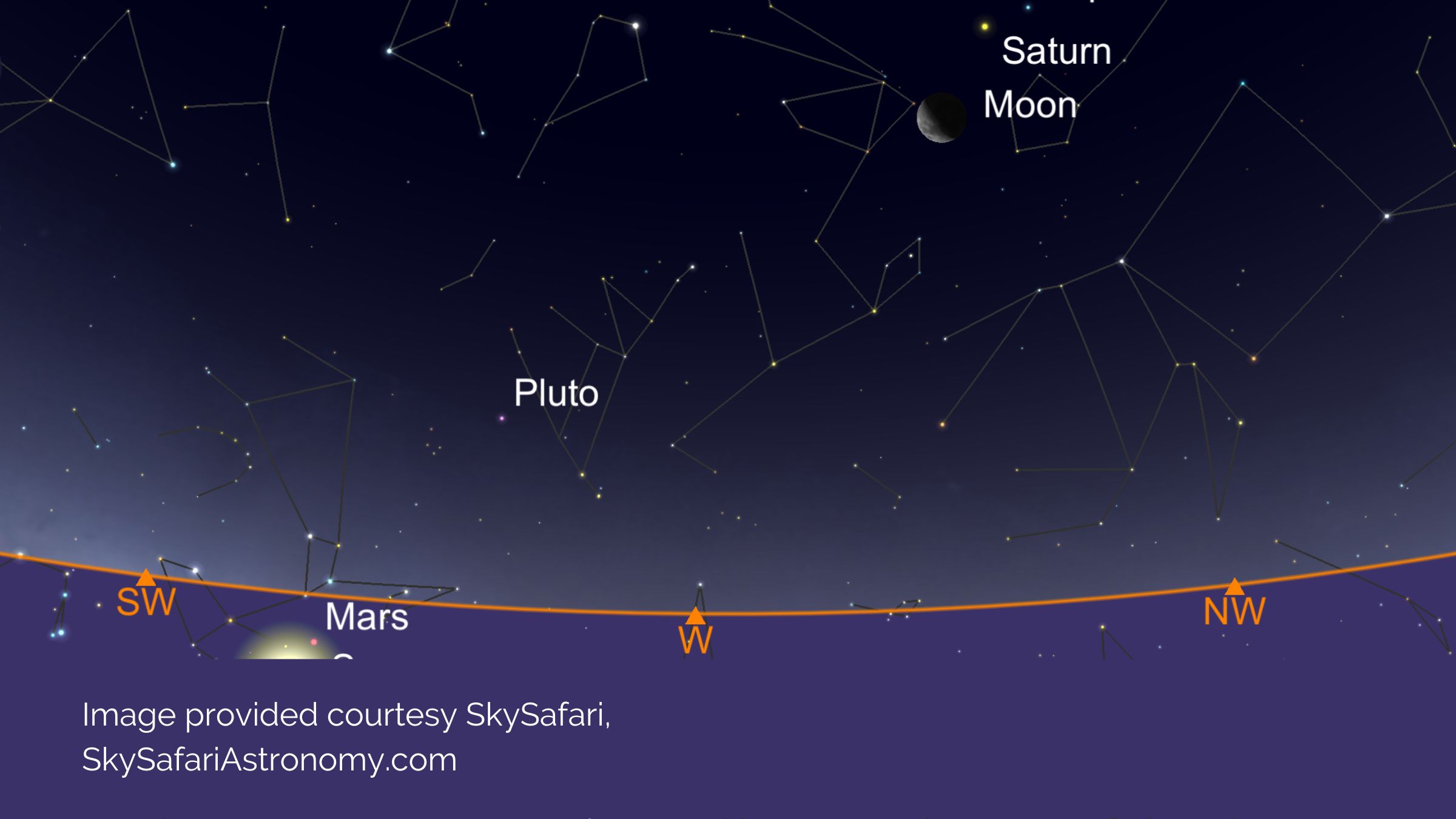
After Christmas on Boxing Day evening, Saturn and the Moon will paint a pretty picture on the western horizon. If you got a telescope for Christmas, try finding Saturn. It’s the ringed planet and is one of the most favourite objects to see through a telescope....
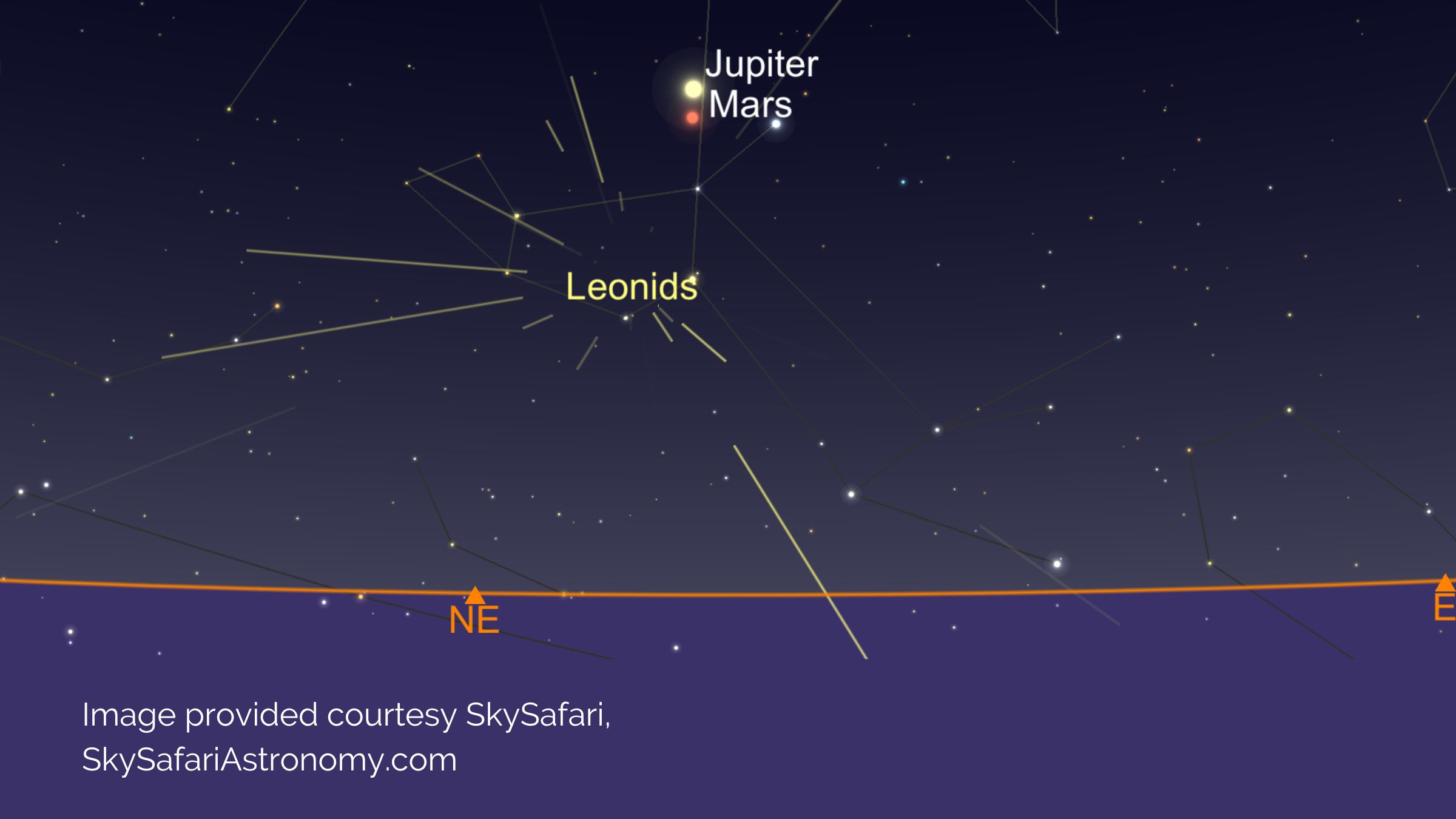
It’s Jupiter and Mars that will see in the New Year with you! Followed by our beautiful Moon. At midnight, the two naked-eye planets will be on the north eastern horizon. The Moon is a bit slower to welcome 2027. It will rise just before 12.15am on 1st January. ...
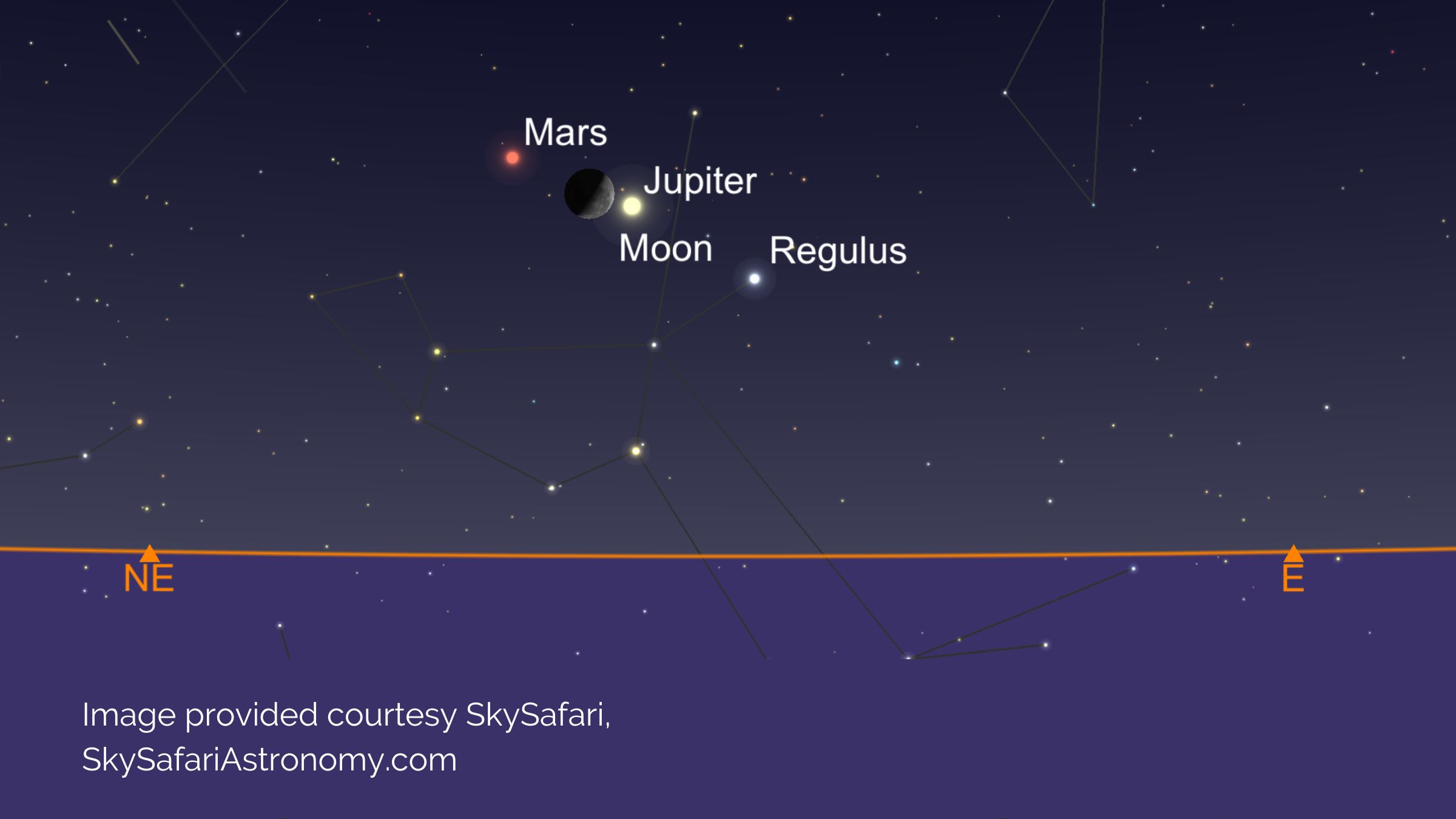
Jupiter is rising in the early mornings. For the early birds on 3rd November, there’s a great opportunity to see bright Jupiter sitting alongside the Moon. Mars is on the opposite side of the Moon and they are all appearing alongside the constellation, Leo....
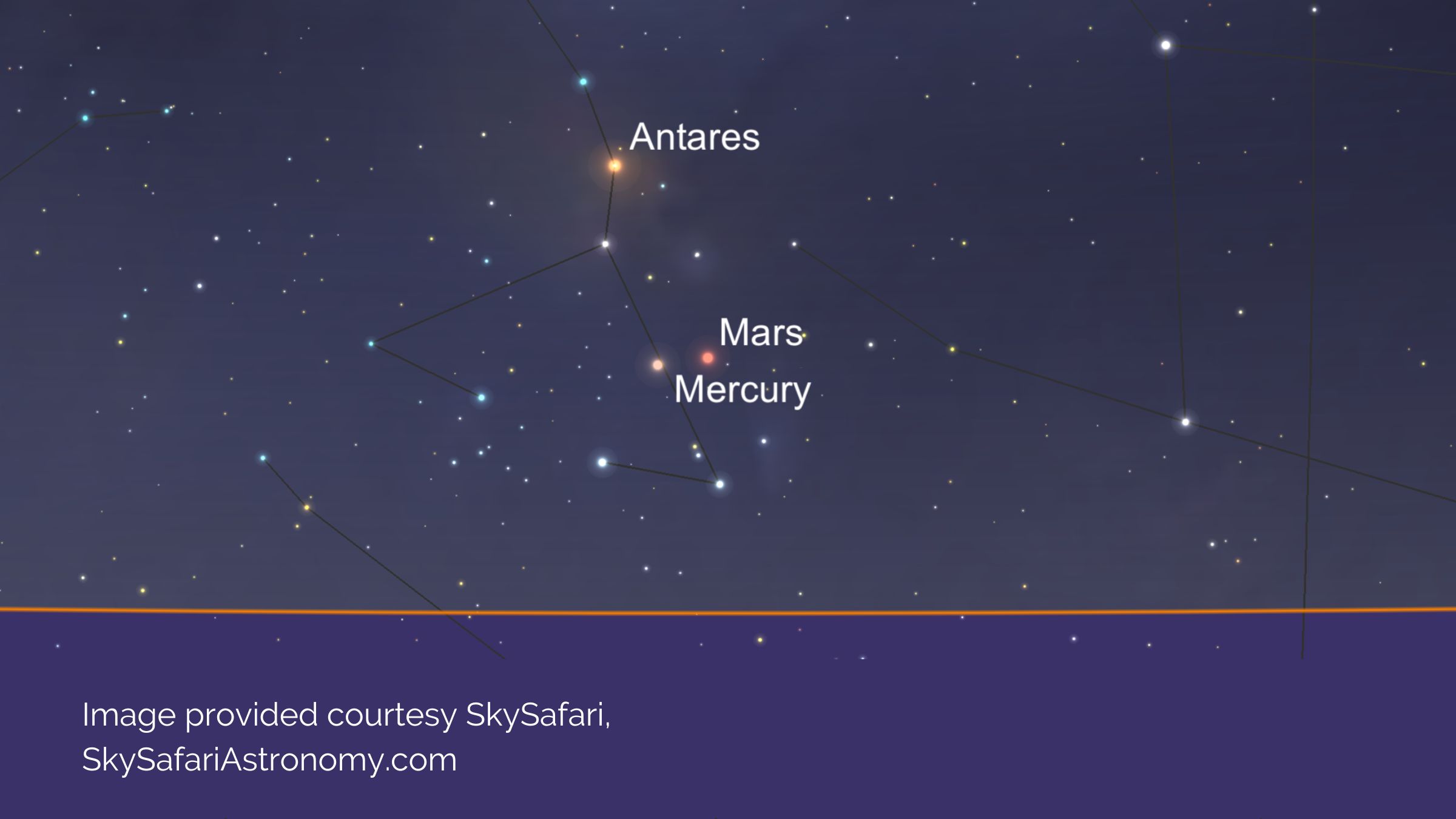
If you haven’t ticked Mercury off your planet bucket list yet, tonight is the night! Use bright red-coloured Mars as your guide and you’ll spot the closest planet to the Sun in no time at all. After sunset on 13th November, Mercury is just to the left of...
The Leonid meteor shower is caused by the Earth flying through debris left by Comet 55P/Tempel-Tuttle. Around every 33 years, we pass through a fresh debris deposit, which very occasionally produces bursts of thousands of meteors per minute. Is it worth me getting out...
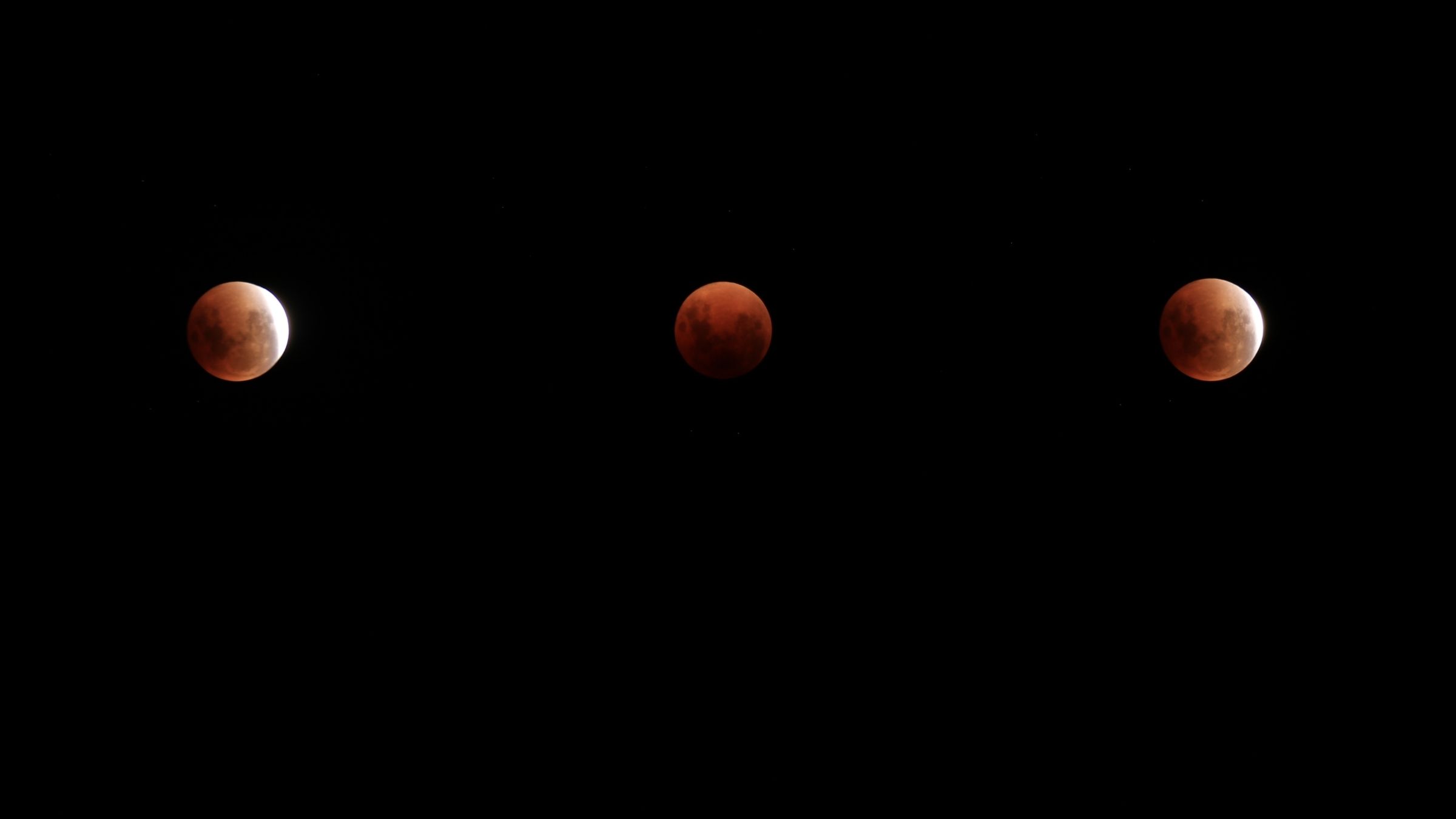
Eclipses are wonderful examples of the extraordinary motion of the objects within our Solar System. For natural cosmic phenomena, you don’t get more remarkable than a total eclipse of the Moon! For a total lunar eclipse to occur, the Sun, Earth and Moon need to...
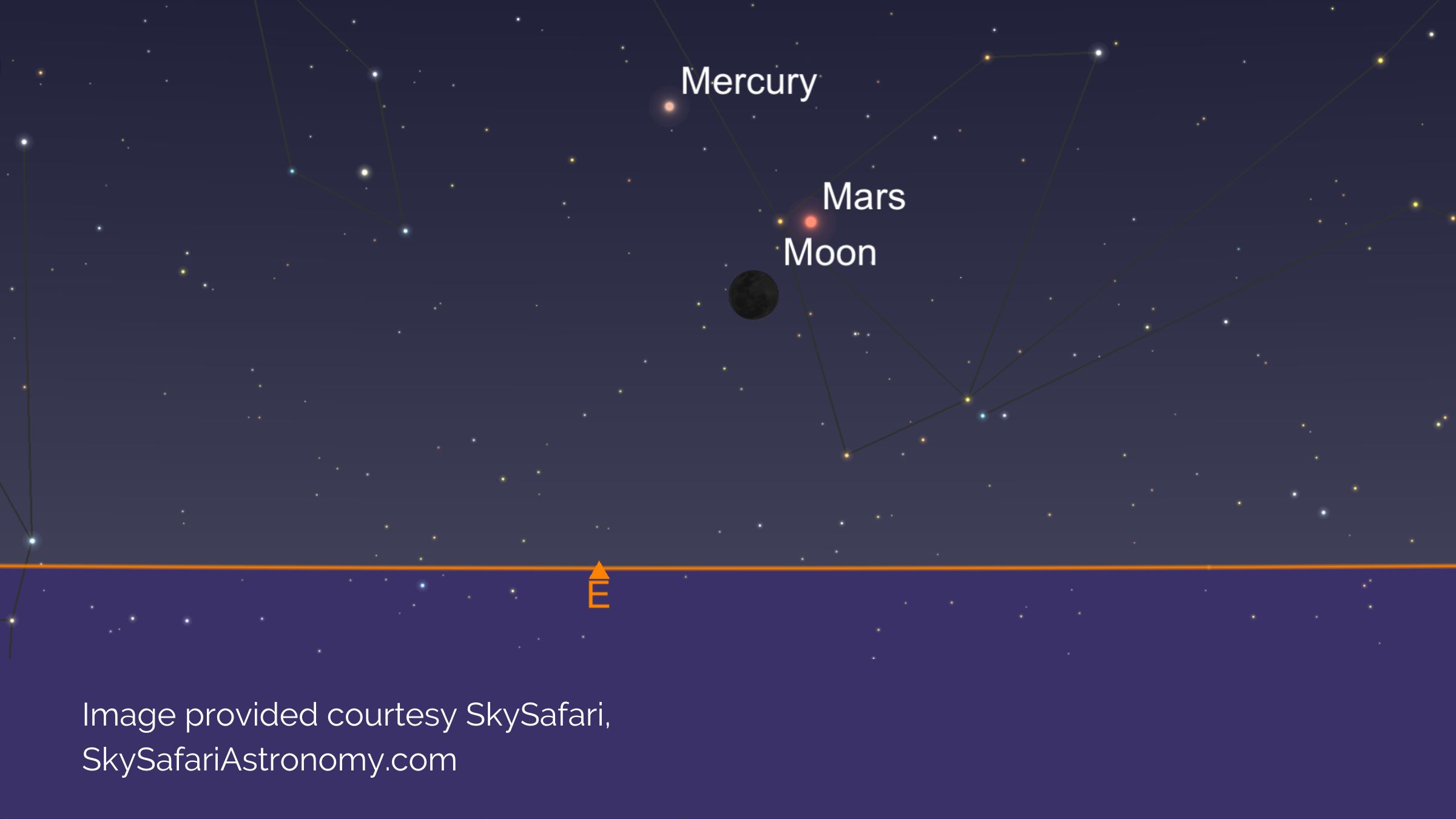
For the early birds on the 18th March, there’s a beautiful view of the Moon and Mars appearing very close to one another with Mercury just nearby. Mars is the red star-like object above the Moon. Bright Mercury is a little higher up. Use the above image as a...



Recent Comments